
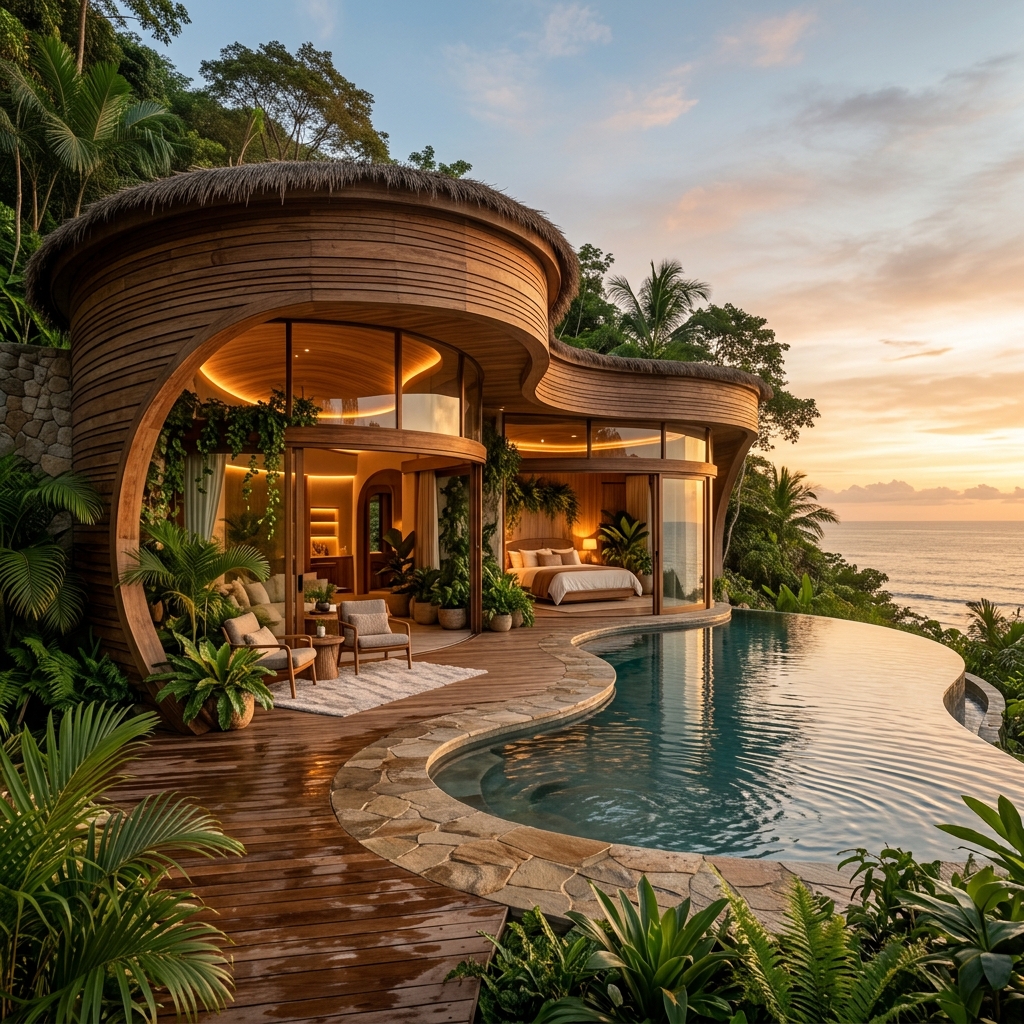
The global hospitality and architectural landscapes are undergoing a profound paradigm shift in 2026. The era of superficial "greenwashing" and ostentatious luxury has given way to a sophisticated, science-backed movement known as the Architecture of Longevity. Leading luxury eco-resorts across Europe, Southeast Asia, and Africa are merging circular design principles with advanced neuroarchitecture to build sanctums that actively restore human health while healing their surrounding natural ecosystems.
Rather than treating sustainability as a secondary checklist, contemporary architects are designing buildings as living, regenerative organisms. By harnessing non-toxic organic materials, natural circadian lighting systems, and biophilic geometry, these modern retreats offer guests an immersive environment engineered to lower cortisol levels, optimize sleep architecture, and extend biological healthspan.
Neuroarchitecture: Designing Spaces for Mind & Nervous System Repair
At the forefront of this architectural renaissance is neuroarchitecture—the discipline of combining neuroscience with spatial design to understand how built environments impact human brain function and physiological stress responses. Recent studies published by human-centered design institutes demonstrate that harsh right angles, synthetic lighting, and acoustic glare in conventional hotel structures maintain the human nervous system in a state of low-grade, chronic fight-or-flight tension.
To counteract this, 2026's premier eco-resorts incorporate soft, organic curves inspired by natural landforms, sound-dampening acoustic earth-plasters, and circadian lighting systems that automatically modulate color temperature and lux intensity in harmony with the sun’s daily arc.
"We no longer view a room as mere shelter or static decor; it is an active biological intervention. When spatial proportion, natural circadian light, and biophilic textures align, the nervous system instantly recalibrates, initiating deep restorative physiological repair," explains Dr. Elena Vance, lead researcher in environmental psychology.
Circular Construction and the 'Material Bank' Philosophy
From a structural perspective, luxury hospitality has embraced the Material Bank concept. Under this circular architecture framework, buildings are engineered for complete disassembly and material recovery at the end of their multi-decade lifecycle, eliminating demolition waste entirely.
- Reclaimed & Local Timber: Sourced strictly from certified sustainable forestry or salvaged heritage structures, minimizing embodied carbon emissions.
- Low-Carbon Hempcrete & Rammed Earth: Naturally breathable wall systems that regulate indoor humidity and temperature without reliance on energy-intensive HVAC units.
- Non-Toxic Organic Finishes: VOC-free natural mineral paints, zero-chemical timber oils, and organic linen textiles that preserve indoor air quality.
- Biophilic Water Cascades: Integrated indoor-outdoor water features that produce beneficial negative ions and natural acoustic masking for mental clarity.
By prioritizing raw, tactile elements, these properties establish a visceral connection between guests and the natural world, fostering deep grounding and sensory relief from urban digital fatigue.
Contrast Therapy, Thermal Sanctuaries, and Longevity Retreats
The integration of wellness in 2026 extends beyond conventional spa menus into the foundational floor plan of every guest villa. Private pavilions now feature built-in contrast therapy circuits—combining cedarwood infrared saunas, cold plunge pools, and circadian relaxation lounges designed for clinical-grade physical recovery.
Furthermore, luxury eco-resorts are collaborating with longevity specialists and functional medicine practitioners to offer hyper-personalized stays. Guests receive non-invasive metabolic assessments, sleep architecture tracking, and tailored botanical nutrition derived directly from on-site permaculture gardens. The goal is no longer temporary escapism, but equipping travelers with sustainable health habits and restored cellular energy.
The Rise of 'Slow Travel' and Regenerative Eco-Tourism
Hand-in-hand with longevity architecture is the surge in Slow Travel—a travel ethos where guests trade chaotic, multi-destination itineraries for extended 7-to-14 day immersions in single, ecologically conscious locations. Modern travelers prioritize "quick luxury," seeking out purpose-led properties that invest a tangible portion of guest revenue into native wildlife conservation, reforestation, and local indigenous craftsmanship.
As the boundary between ecological responsibility and personal wellness continues to dissolve, the Architecture of Longevity stands as a beacon for the future of living design. By harmonizing human biology with environmental stewardship, these pioneering sanctuaries prove that true luxury lies in health, tranquility, and harmony with the Earth.
Discussion